





















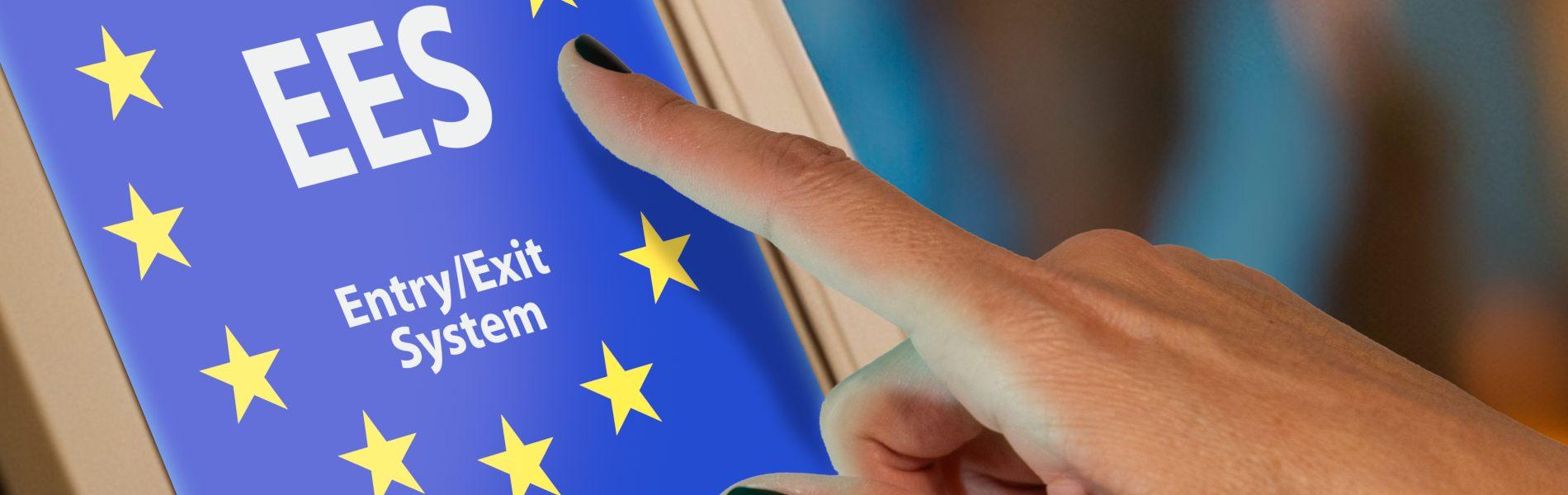
NEW EU RULES: EES launched 10 April 2026, rolling out across the Schengen Area, and is expected to complete 7 September 2026 introducing digital biometric border checks for UK holidaymakers.
Here’s the good news: travellers from the UK and other visa-exempt “third countries” don’t need to do anything before arriving at the border - there’s no pre-registration, no forms, and no extra charges.
When reaching the border of a Schengen country (like Spain, France, Italy or Greece), simply follow the signs and instructions for EES at passport control.
How does the EES system work?

The first time you enter the Schengen zone, your passport will be scanned and biometric details - four fingerprints and a facial photo - will be collected at a special kiosk or by a border officer. Children under 12 only have photos taken. The border control personnel may also ask a few basic questions about the trip. After this, crossing the border for future trips should be quicker, as the biometric registration will be valid for three years. Each time you enter or leave the Schengen zone, the EES records and checks the details, replacing manual passport stamping.
Does EES affect border wait times?

Now EES has launched, everyone will need to allow a little more time at border crossings - especially at busy airports, Eurostar, Eurotunnel, and ferry ports. Biometric collection and digital registration take a few extra minutes the first time, so queues may be longer at the start. The system is being introduced in phases to support a smoother rollout. For frequent travellers, once registered, future border crossings should be more efficient since the process is digital and automated, though there there may still be occasional teething problems during early implementation.
Is EES the same as ETIAS?
They are two different systems!
• EES is the digital border control that registers when you enter or leave the Schengen zone by collecting biometric data at the border.
• ETIAS (expected to launch in Spring 2027, exact date tbc) is a pre-travel authorisation - a bit like a visa waiver. Holidaymakers and other non-EU visitors will need to apply for ETIAS approval before travel, but EES is all about recording live border crossings. Both will eventually work together, but they are not the same: EES does not require advance application or a fee, while ETIAS is an online application with a charge.
Are frequent travellers or residents affected?

• Tourists and most short-stay visitors (up to 90 days in 180) will use EES just like other travellers.
• Holders of long-term visas, residence permits, or dual nationals (with an EU passport) can use the regular residency/resident card process or present their EU passport to skip EES.
• UK/EU dual citizens: Use the EU passport for entry to avoid EES.
• Expats and residents: If you hold a valid EU residence permit or a long-stay visa, border staff will check that instead, so EES rules do not apply. If you’re using a UK passport you’ll always use the EES process even if you spend lots of time in Europe.
How does EES protect travellers’ data and privacy?
The EES is designed and operated under strict EU data protection laws. Biometric and travel data will be stored in a secure, central system for up to three years from the last entry, and only for as long as needed for border management and to check for overstays or irregular migration. The data is encrypted and can only be accessed by authorised national authorities and EU agencies involved in border security. Data protection is overseen by both eu-LISA (the EU agency managing the tech) and national privacy authorities, with clear provisions for amending or deleting data in case of errors.
What happens if the EES system is down?
EU member states are required to have “fallback procedures” if there’s ever a technical hiccup. If systems fail at the border, border agents can temporarily process arrivals manually and keep physical records. Provisions are built in to avoid major disruption, and any travel delays are likely to be kept to a minimum. If there are any technical issues, border systems have fallback processes to help keep queues moving smoothly.
With EES now in place, there’s nothing extra to pack - just factor in a little extra time for the first trip and enjoy exploring Europe with even more ease in the future. For further information check out our full FAQs on EES and EITAS.
*Correct at time of publishing; 15.04.26

About the author
Edd Myerscough has explored more than 15 destinations solo, from discovering top European cities to hiking in the Carpathian Mountains, and admiring the stunning beauty of the Canadian Rockies. If you're after top tips on planning a seamless city break or an adventurous escape, Edd's got you covered with stories and practical advice to inspire your next journey.