














Today, most major cities in Germany host Volksfests (people’s festivals), with Oktoberfest being Munich’s famous German beer festival and Stuttgart’s Cannstatter being the second biggest. But there’s much more to these festivals than sampling different varieties of Helles and Weissbier. They’re family-friendly carnivals, with rides, entertainment and activities for all ages, as well as plenty to enjoy if beer isn’t your thing.
If you’re planning a Volksfest or Oktoberfest holiday, here’s everything you need to know about Munich’s big annual celebration and some of the alternatives to explore.
Practical information at a glance
Oktoberfest, Munich: 19 Sep - 4 Oct 2026
Flights from: Birmingham, Bristol, Edinburgh, London and Manchester.
New flight routes for 2026: Luton and Southend.
Cannstatter, Stuttgart: 25 Sep - 11 Oct 2026
Flights from: Edinburgh, London and Manchester.
Day trip from: Munich (2 hours by train).
Herbst-Rummel, Berlin: 25 Sep - 25 Oct 2026
Flights from: Birmingham, Bristol, Edinburgh, Glasgow, Liverpool, London, Manchester and Newcastle.
Freimarkt, Bremen: 17 Oct - 2 Nov 2026
Flights from: Stansted. Indirect options via Frankfurt or Munich.
Day trip from: Hamburg (1.5 hours by train).
Munich Oktoberfest
When is it?
If you're wondering where/when is Oktoberfest in Munich, Germany’s big Volksfest ends on the first Sunday in October and starts 16 days prior to this. For 2026 this means the start date is Saturday 19 September, marking the festival's 191st edition. It’s held in Theresienwiese Park, to the west of the Old Town.
You’ll find a mini version of the event is held in the exact same spot during April and May. Named Frühlingsfest (Spring Festival), it’s referred to by locals as Oktoberfest’s little sister. While year round you can visit the Beer and Oktoberfest Museum, located in a 14th century townhouse.
What’s there to see and do?
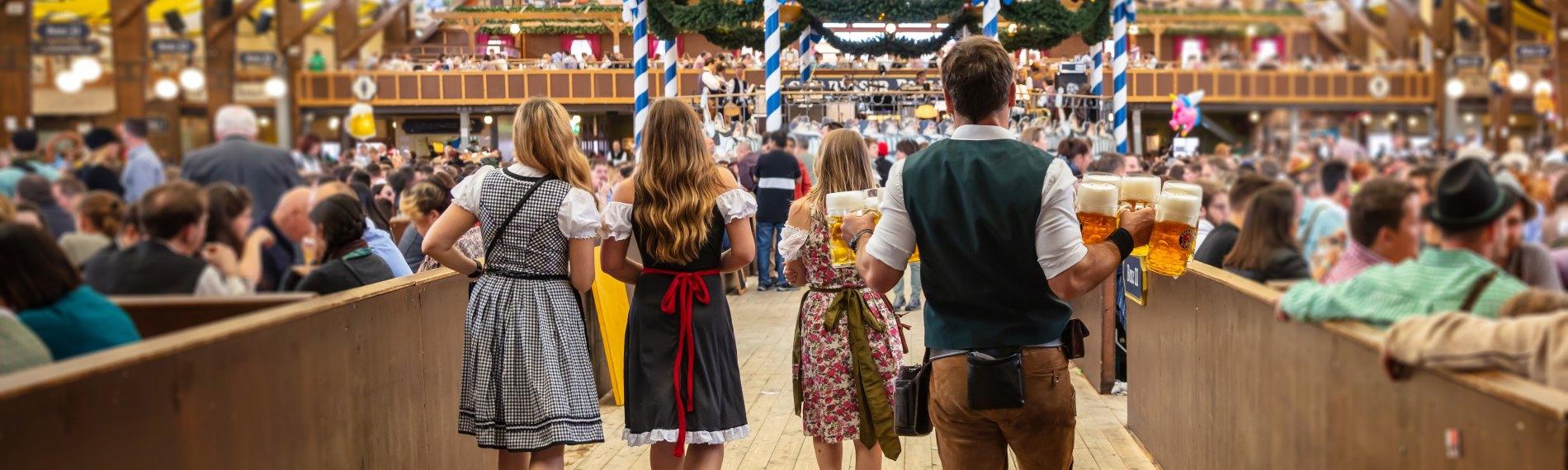
You may be surprised to learn that Munich’s annual Oktoberfest is not just a drinking festival. OK there might be 38 beer tents, 7 million litres of booze drunk annually and you might see some superstrong barmaids carrying a daringly high number of full beer glasses. But there is so much more to see! You'll find funfair rides, food stalls, games and even live music across Theresienwiese's 42 hectares.
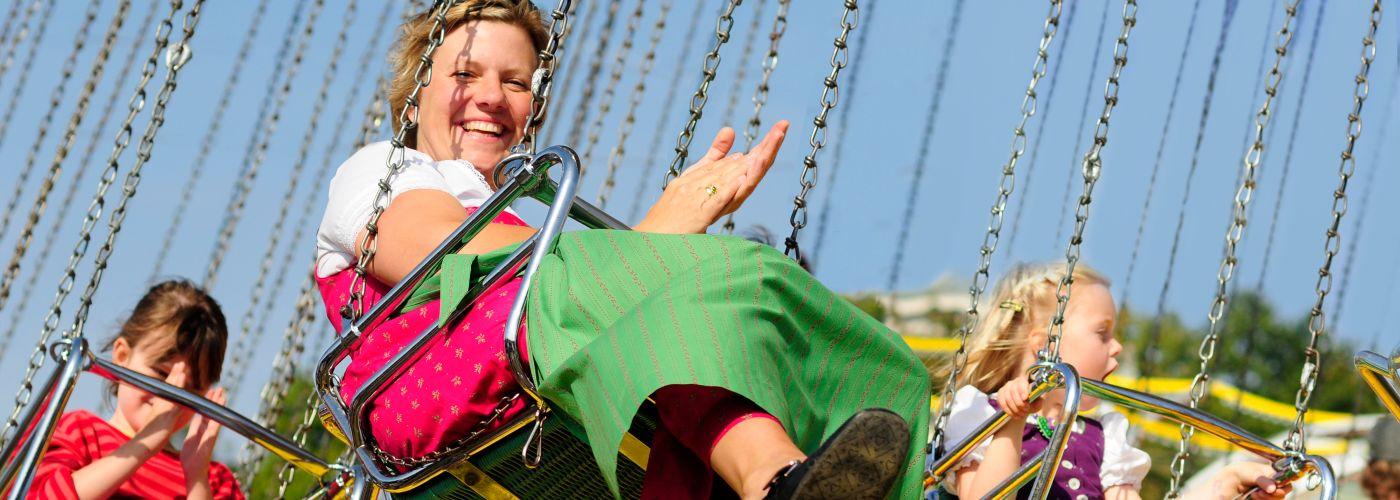
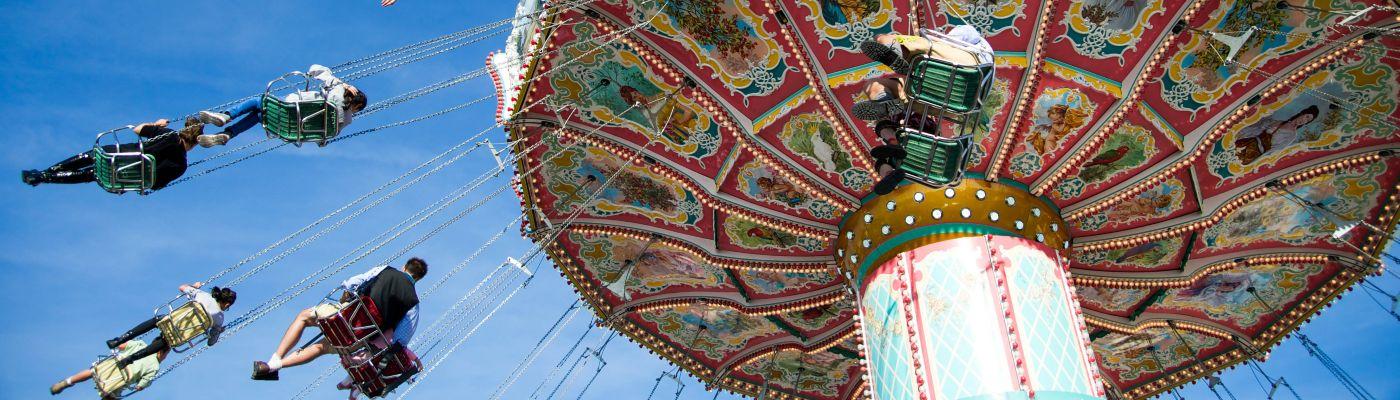
Little ones will want to ride the 50m ferris wheel. It’s illuminated in the evening, the perfect time to snap a photo for your social feed. While there’s roller coasters for adrenaline junkies, probably best ridden before sampling too much of the local Bavarian cuisine.
What should I wear?
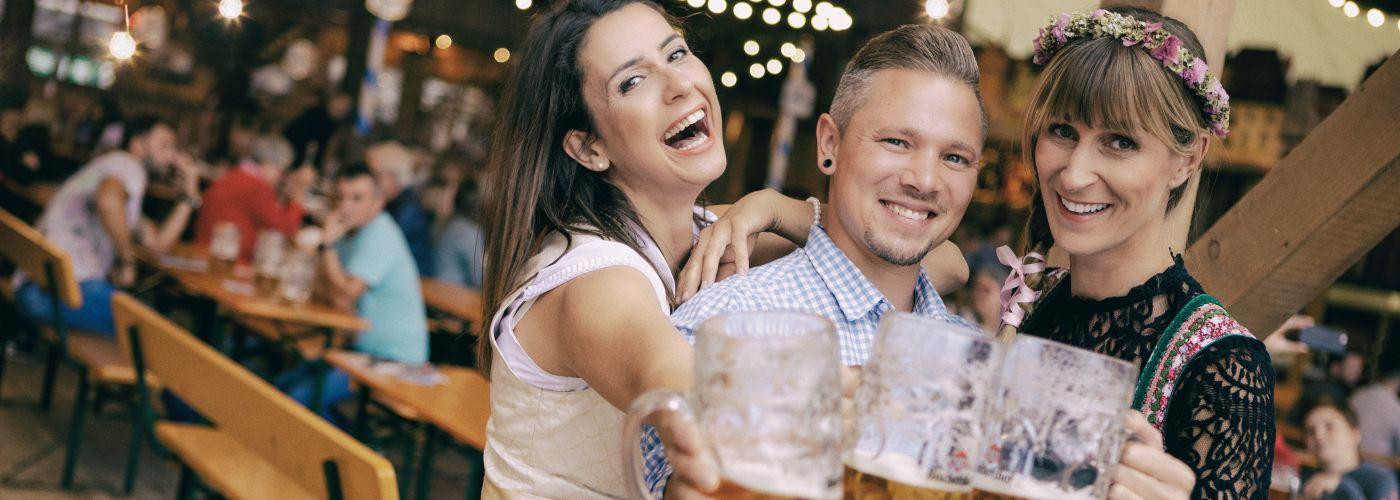
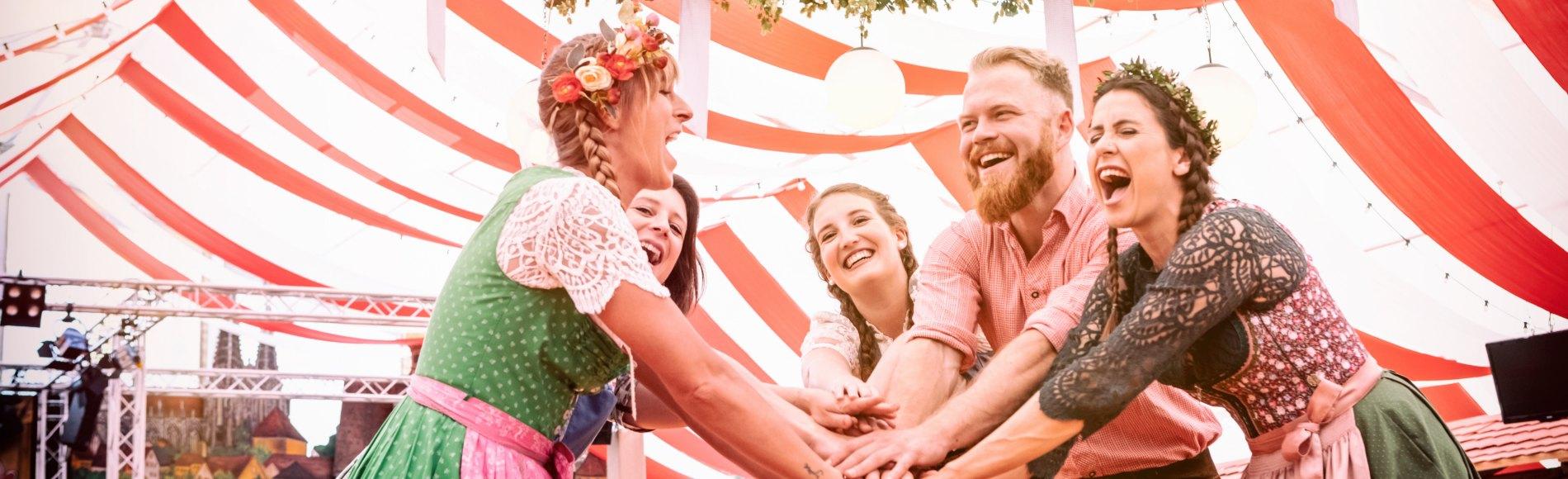
The traditional dress for women is a tight-fitting Bavarian dirndl dress, worn over a white blouse, with an apron tied around it. For men it’s tight fitting lederhosen (with braces), accompanied by a shirt - usually checkered.
Dressing up in traditional attire is optional. If you don’t want to wear the full outfit you could opt for a hat or a themed t-shirt.
Alternative Volksfests
There’s plenty of Volksfests held in Germany throughout the year. So if you’ve done an Oktoberfest trip before and are looking for an alternative this year, you should consider one of the other autumnal German beer festivals. Here’s our lowdown on some of the best:
Stuttgart’s Cannstatter
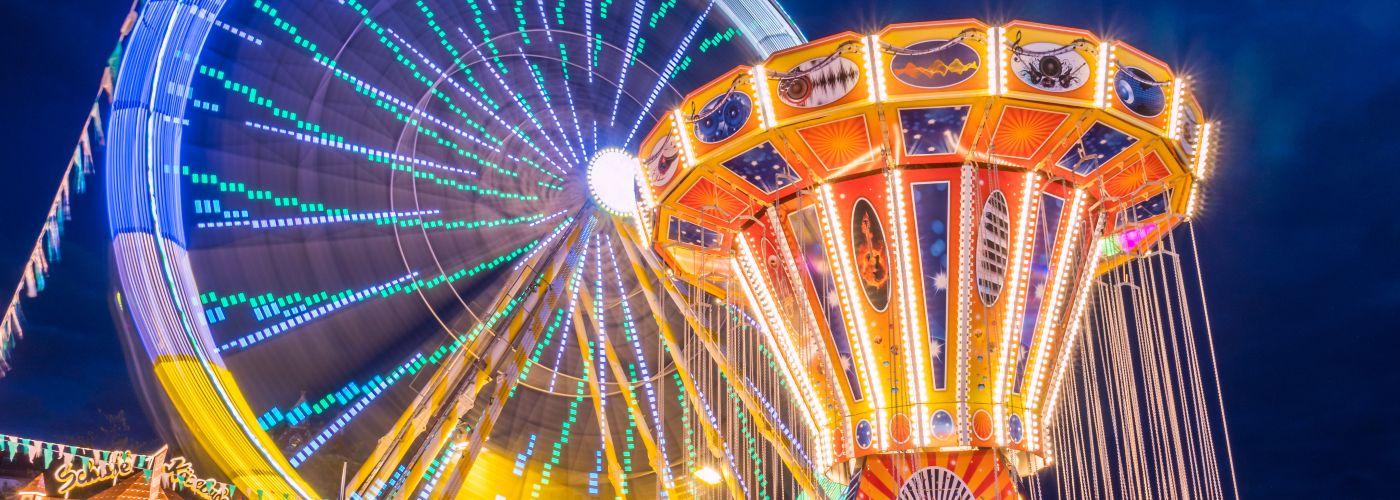
Around four million people visit the Baden-Württemberg capital each year for Germany’s second biggest Volksfest. The locals do not refer to it as a beer festival, but the city’s autumn fair boasts seven tents, with seating for 24,000 people. The picturesque Alpine Village includes bars and a beer garden, as well as food stands dishing up French cuisine. Like Oktoberfest, the travelling funfair provides entertainment for the whole family with attractions including ferris wheels and roller coasters.
Cannstatter starts on the last Friday in September and runs until mid-October. On the first Sunday a parade includes a Swabian-Hall swine pig, highlighting the festival’s agricultural origin. There’s also plenty of traditional entertainment, with brass bands, colourful costumes and dancing adding to the festive atmosphere. If you’re looking for something a little quieter, wander through the market stalls, where you’ll find local produce, crafts and souvenirs.
If you’re lucky enough to be there on the 3rd October you’ll see the skies illuminated with all the colours of the rainbow, to mark the reunification of Germany. Stuttgart’s Cannstatter Volksfest is a great alternative to Munich Oktoberfest, particularly if you fancy experiencing a traditional German beer festival with a slightly more local feel – and there's more to explore if you build a wider trip around it, with Stuttgart holidays covered in our Germany guide.
Bremen’s Freimarkt
If you can’t travel at the end of September or beginning of October, Bremen’s carnival is an ideal choice, as it runs for two weeks from mid-October. If you want to know what the first one was like in 1035 visit the Marktdöflein (little market) where smithies, masons, and jesters take you back to the days before newspapers, never mind mobile phones.
Berlin’s Herbst-Rummel
Berlin’s autumn carnival runs for a whole month, starting on the first Saturday in September. With more than 70 rides to choose from it’s one of the best times for families to visit the German capital. If you’re a daredevil, you can even have a go at bungee jumping.
Which festival suits me?
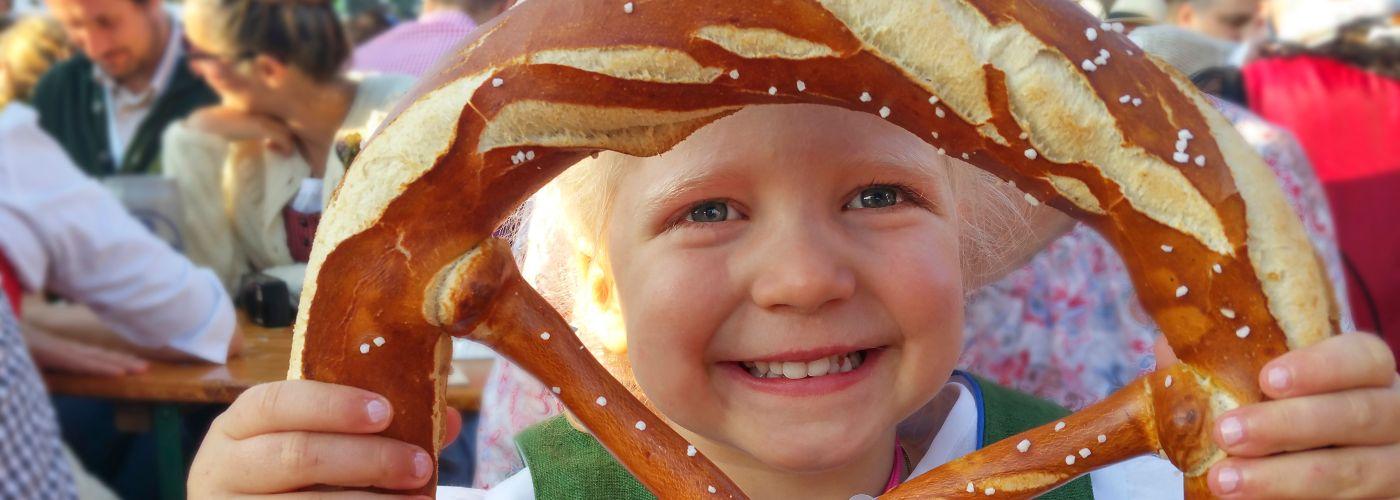
As the Volksfests last between a fortnight and a month you may have to pick the festival that matches dates you’re able to travel. Freimarkt in Bremen is the only one that aligns with October half term dates. Berlin’s Herbst-Rummel lasts a whole month and with the German capital having the greatest range of UK flights, it would be the easiest for many Brits to attend.
There’s many forum and social media posts recommending Cannstatter as the best for families, but then others say Oktoberfest. There’s no right and wrong answer. If you live in the Midlands or South West it’s probably worth considering you can fly to Munich from Birmingham or Bristol, while flying to Stuttgart would involve flying from either Manchester or London.
While each of the celebrations has different origins, there’s a number of similarities, so whichever you attend you’re sure to have a great time.
Want to do more than attending Oktoberfest? Check out our Munich holidays guide for ideas for exploring the city and beyond to Neuschwanstein Castle and the Romantic Road. Or if you’re still deciding where to go our Germany holidays guide offers you a brief city by city breakdown, as well as the latest deals for flight + hotel packages.
FAQs
How much are tickets for Oktoberfest?
There are no tickets for the festival and the site is free to enter. The same applies for Cannstatter and other major Volksfests in Germany.
How do I reserve a table at Oktoberfest?
Visit the Official Booking and Resale Portal for Oktoberfest. Some tents may be closed to those who have not pre-booked at busy times. If you do choose to make a reservation you will be required to buy a food and drink voucher for your group - effectively the minimum spend per person. Table sizes vary from 4 to 20, while the minimum spend per head varies from €14 to €50, depending on which tent you book and the time of day.
Where can I stay for Oktoberfest 2026 / 2027?
Munich doesn’t have a reputation of being a cheap place to stay. However, at Thomas Cook we’re currently offering over 200 hotels with availability for Munich Oktoberfest 2026. Thanks to the city’s world class public transport comprising buses, trams, U-Bahn and S-Bahn you don’t need to stay a stone’s throw from the festival site. You may choose to stay in a fancy 5 star central hotel, or you can opt for a budget stay on the outskirts and you’ll be within easy reach of Oktoberfest Munich either way.
