






I’d always wanted to visit Morocco, particularly its walled cities and those networks of narrow passageways.
But instead of Marrakech, I was invited to go north, where blue-painted mountain towns and Mediterranean beaches were all part of the same trip.
Over four days, I walked through Tétouan’s medina and Chefchaouen’s blue streets, and went out on a boat from Marina Smir.
My first photo, though, was a close-up of a wall in the luggage collection room at Tétouan airport.
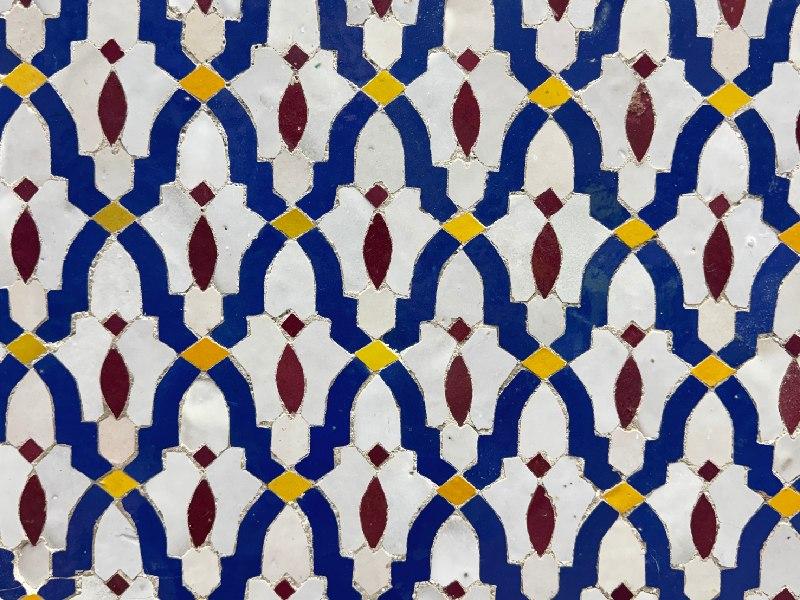
The tilework that kept catching my eye
I hadn't even left the airport and I was feeling like 'that' tourist - taking in my surroundings through a phone screen.
The rest of the room was as you'd expect, lofty metallic luggage scanners crowded with travellers. But tilework seemed to be part of the everyday here. Bringing colour and geometric motifs to doorways, floors and walkways, and these decorative features rewarded you for noticing them.
Outside the Royal Palace
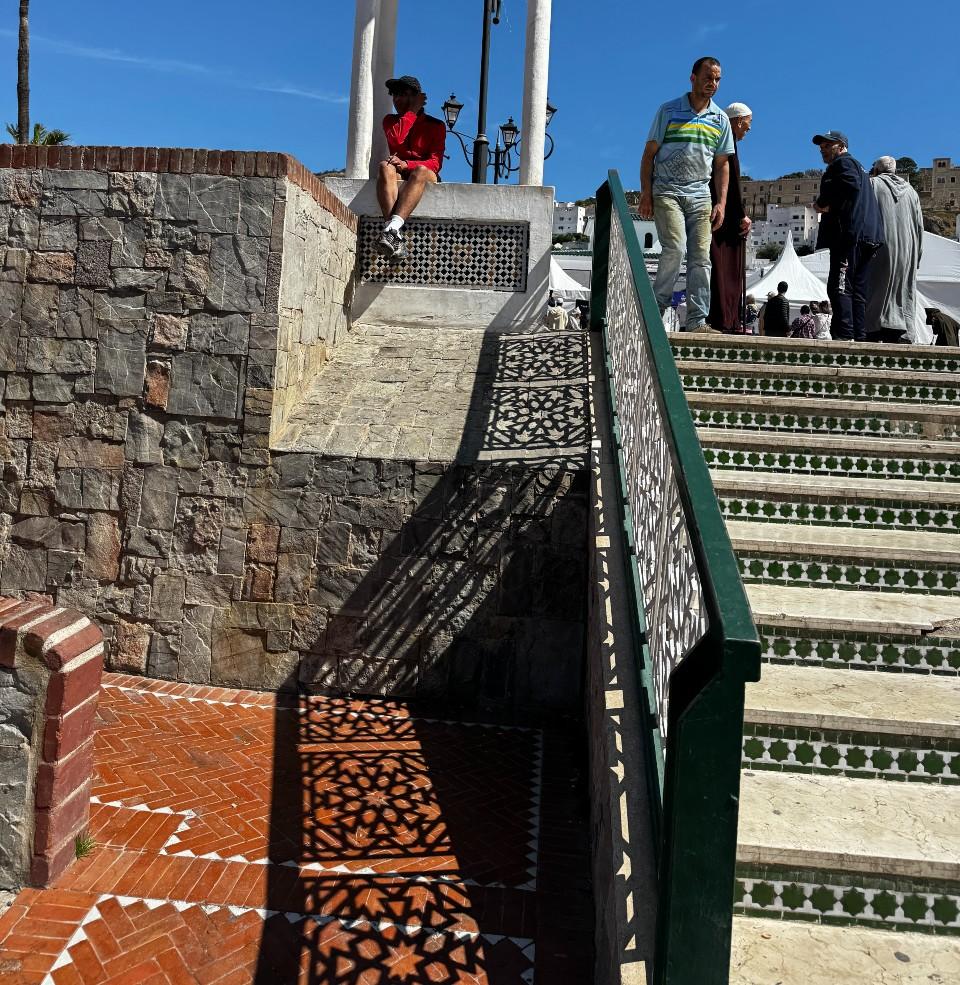
The next morning, we visited Hassan II Square, outside the Royal Palace. I love this photo I took of the steps leading up to the square.
I started to notice how much art and design there was in the outdoor - courtyards, medinas and squares. Patterned shutters and railings cast these ornamental shadows over the spaces.
A morning in Tétouan’s medina
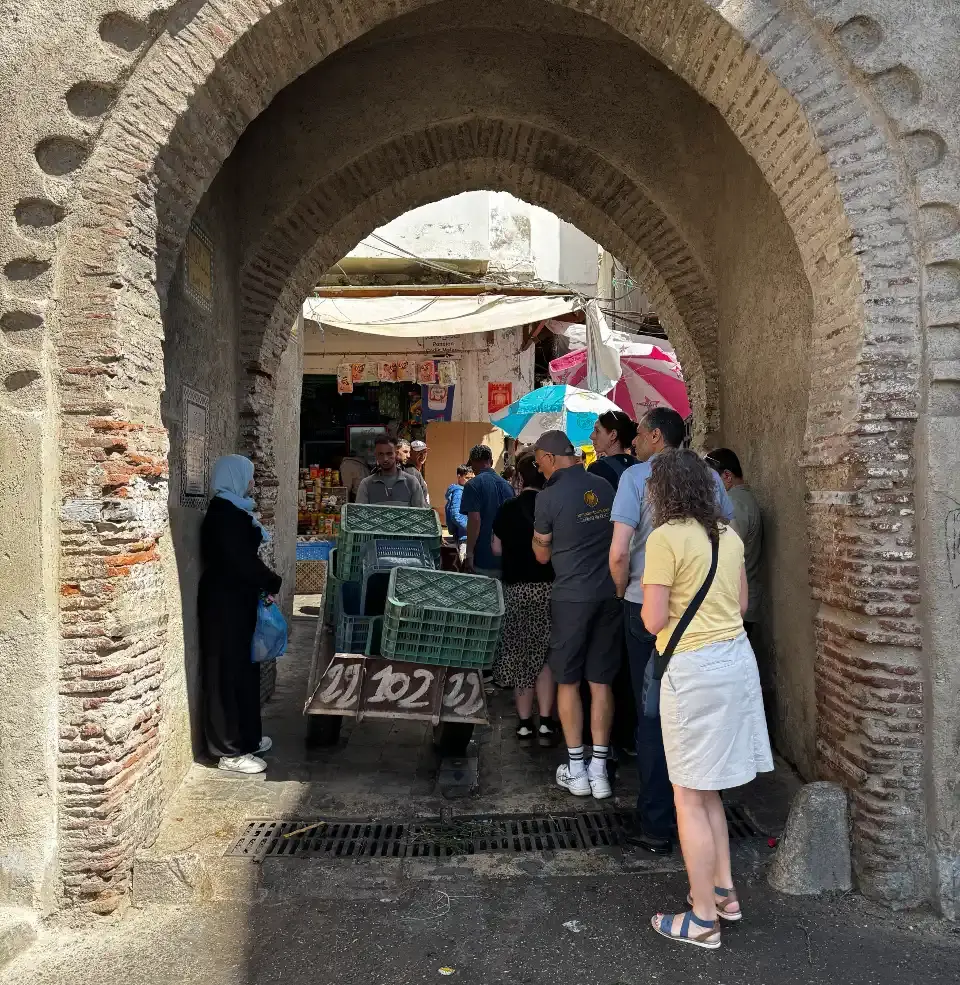
We entered Tétouan's medina through a wide, weathered archway, with petal-like recesses around it. Shuffling into single file we made way for wooden handcarts bringing in the morning deliveries.
The medina is UNESCO-listed. Andalusian refugees expelled from Spain rebuilt the town, and their influence can still be seen in its art and architecture.
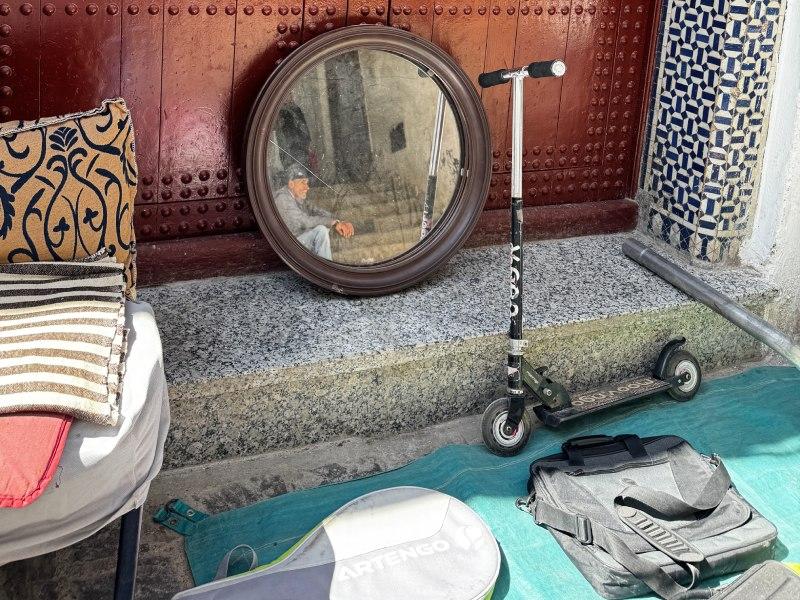
The Medina of Tétouan didn’t feel in the slightest bit touristy to me. I didn't spot any souvenir stalls along the streets we explored.
Instead we saw Moroccans going about their morning grocery shop. Sellers seated beside bowls and baskets of produce, crowded with glossy red peppers, thick sacks of kohl and carefully laid out secondhand and mended goods.
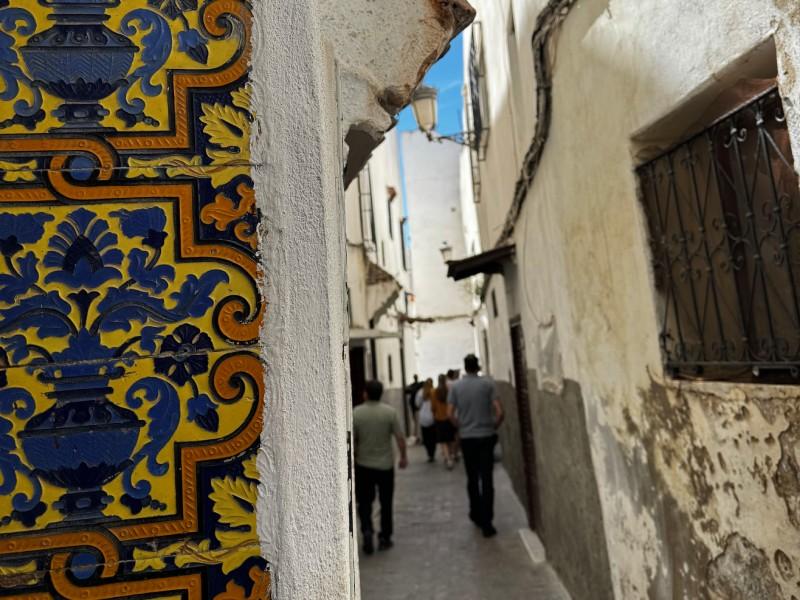
I also found the narrow streets strangely calming. Just one narrow path ahead of me, and the sky overhead seemed to have such a regulating effect on my nervous system.
Less visual noise, less stimulation, no cars. I have ADHD, and I think being enclosed, whilst still outside, helped me feel less overwhelmed and more present.
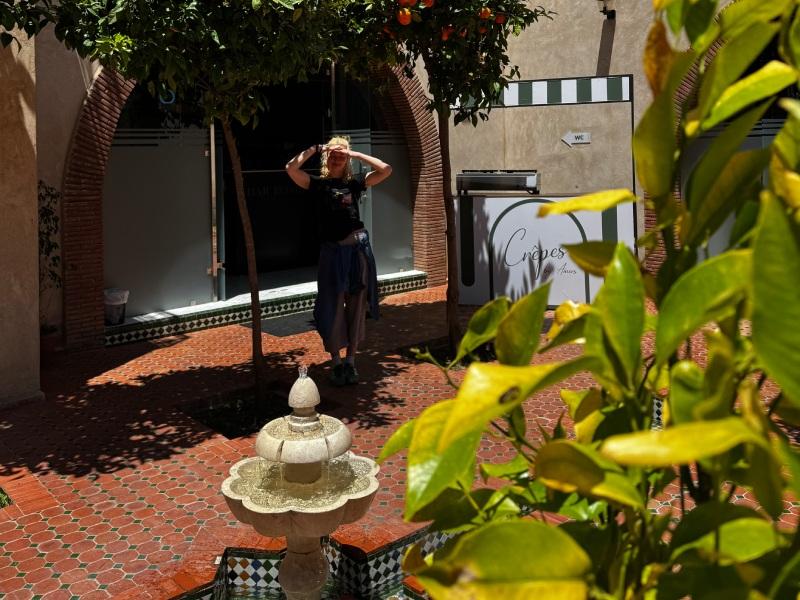
Orange trees, tiled walls and fountains
After exploring, we had lunch at Dar Bomba near Feddan Park. I fell in love with the restaurant's courtyard, with its tiled walls, orange trees and fountains.
We'd just come from the busy shopping streets, but here, all I could hear was the water.
Traditional Moroccan houses are often built around open-air courtyards and hidden behind unassuming walls. These felt like quiet decorative sanctuaries - a place to rest with privacy and shade.
Chefchaouen’s mountains and blue-painted streets
Chefchaouen is the place you’re most likely to recognise before you arrive.
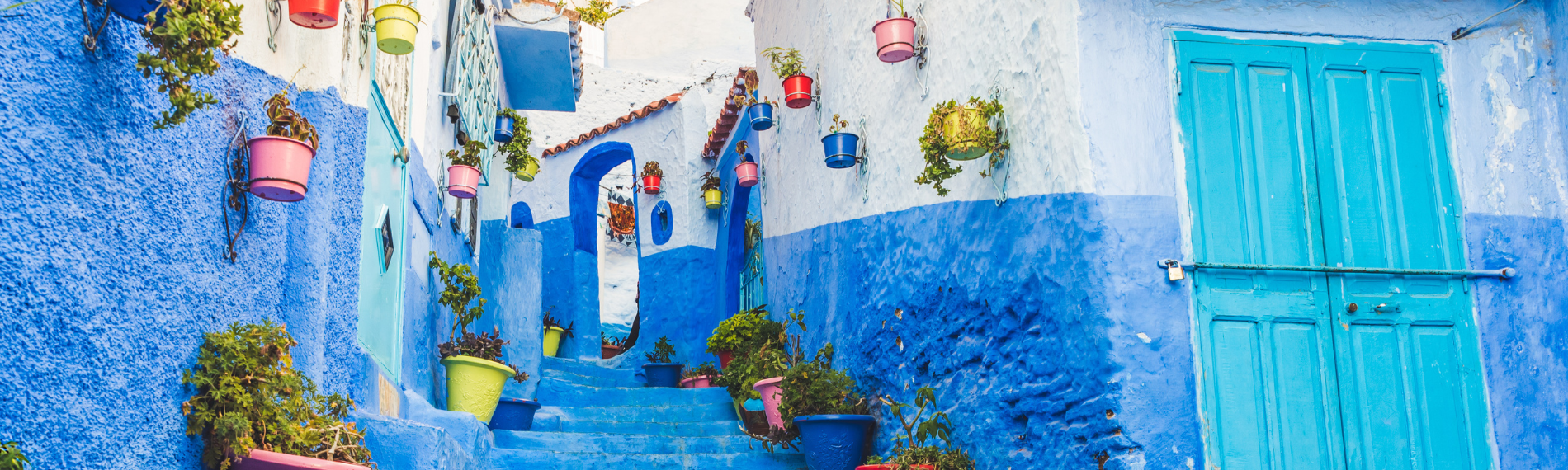
But being there is something else - walking through all that blue. It’s in every direction you look - bright, vivid and arresting on the eyes.
Nearly everyone in the group reacted the same upon arriving and seeing the first blue street, “wow!”
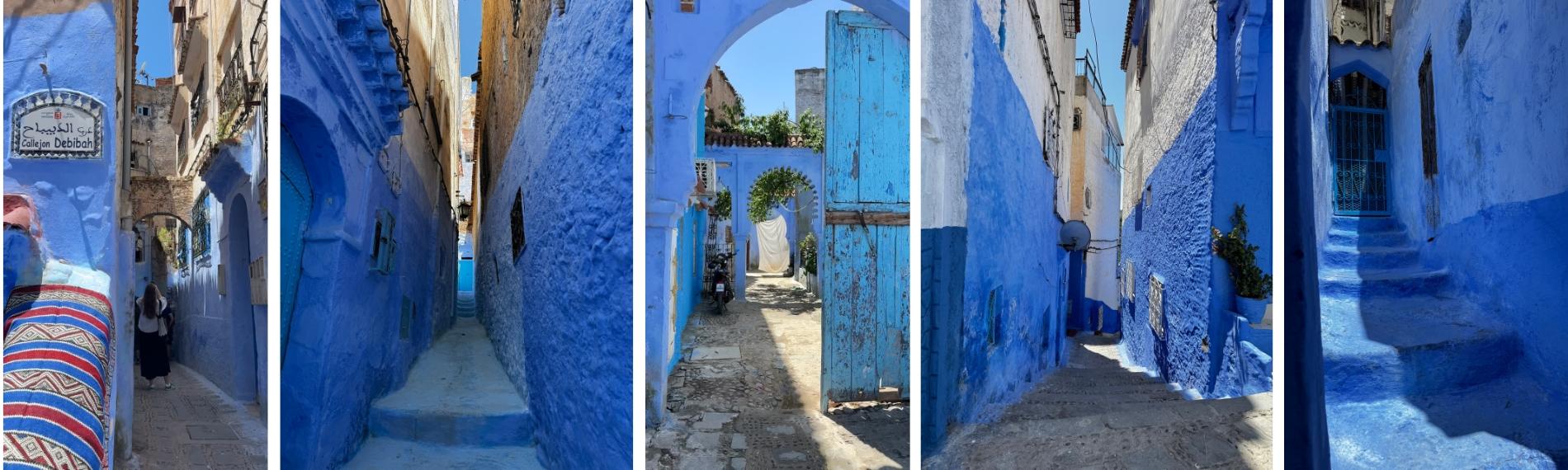
There were blue archways to walk through and steps that kept disappearing round corners. It felt like a place that kept unravelling the further you walked - and yet I wouldn’t always remember which corner I’d just turned.
I don't think I'd have found my way back without my tour guide - but my sense of direction has always been pretty shocking.
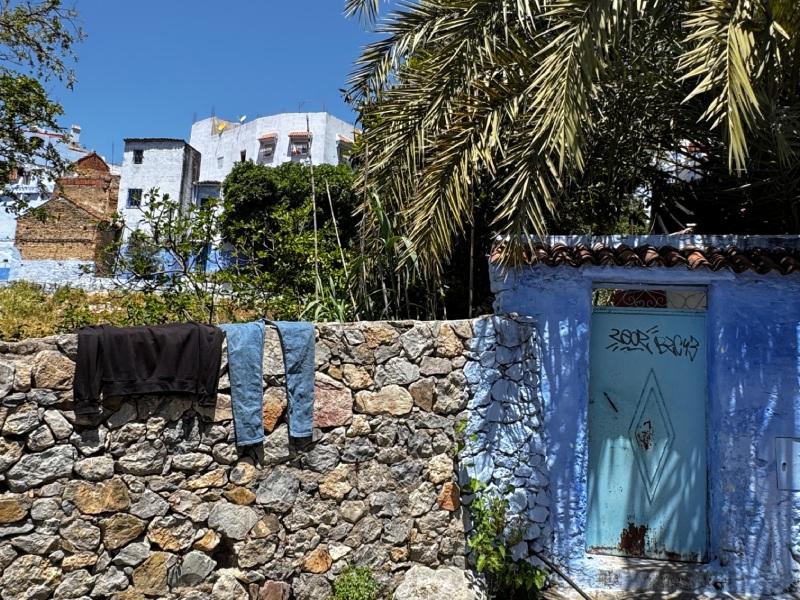
While Chefchaouen almost looks like it’s make-believe, there is so much local life going on here. Washing hanging over balconies, shops selling ordinary jumpers alongside rugs, people passing through the streets. You’re really walking through someone’s neighbourhood.
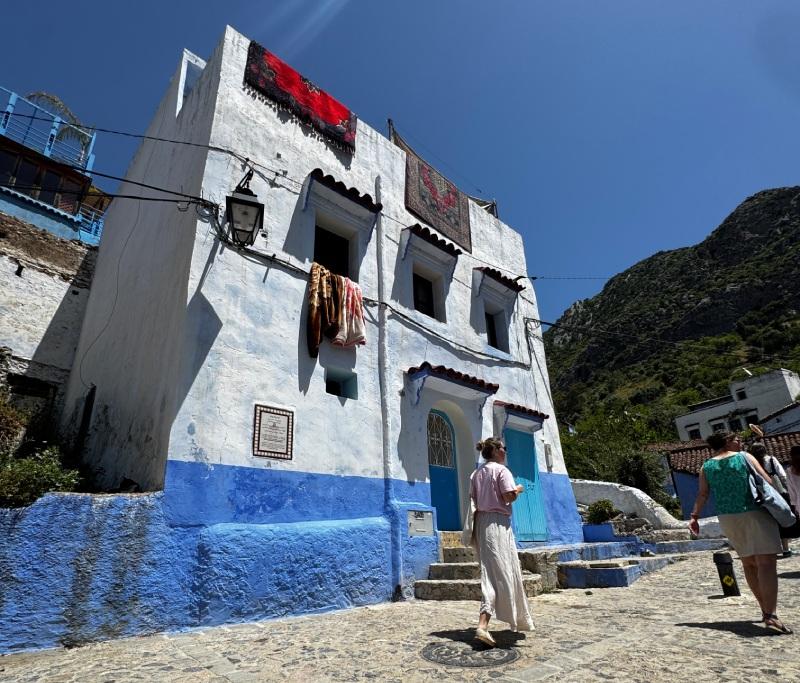
You’re also walking uphill. Chefchaouen sits on a mountainside. Which means steps. Lots of them.
So make sure to wear comfortable shoes with a good sole for walking. If you’re travelling with a pushchair or have limited mobility, ask about the exact route before booking a tour.
Alongside local life, you’ll find endless craft stalls selling beautifully made wares. If my feet could’ve handled it - I would have wanted to spend more hours than I did browsing all the different shops.
Treat Chefchaouen as a full day out from Tamuda Bay. Our drive there took around an hour and a half, and we spent several hours exploring the town.It can feel like a long day on your feet, so I’d leave plenty of time afterwards to relax by the sea or in your hotel spa.
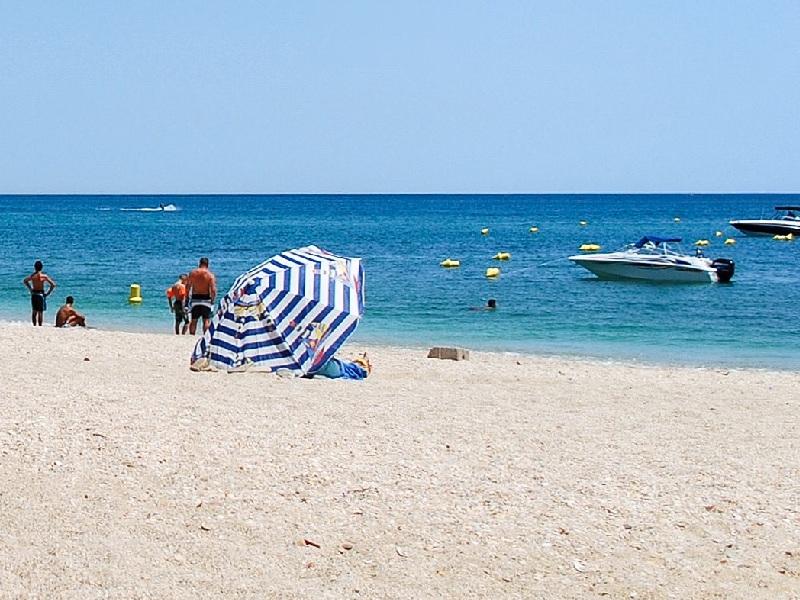
Tamuda Bay gives you a beach to come back to
Tamuda Bay is on Morocco’s Mediterranean coast, close to Tétouan, with a sandy coastline and beachfront hotels.
It’s a good place to stay if you want days out in Tétouan and Chefchaouen, with time at the beach in between.
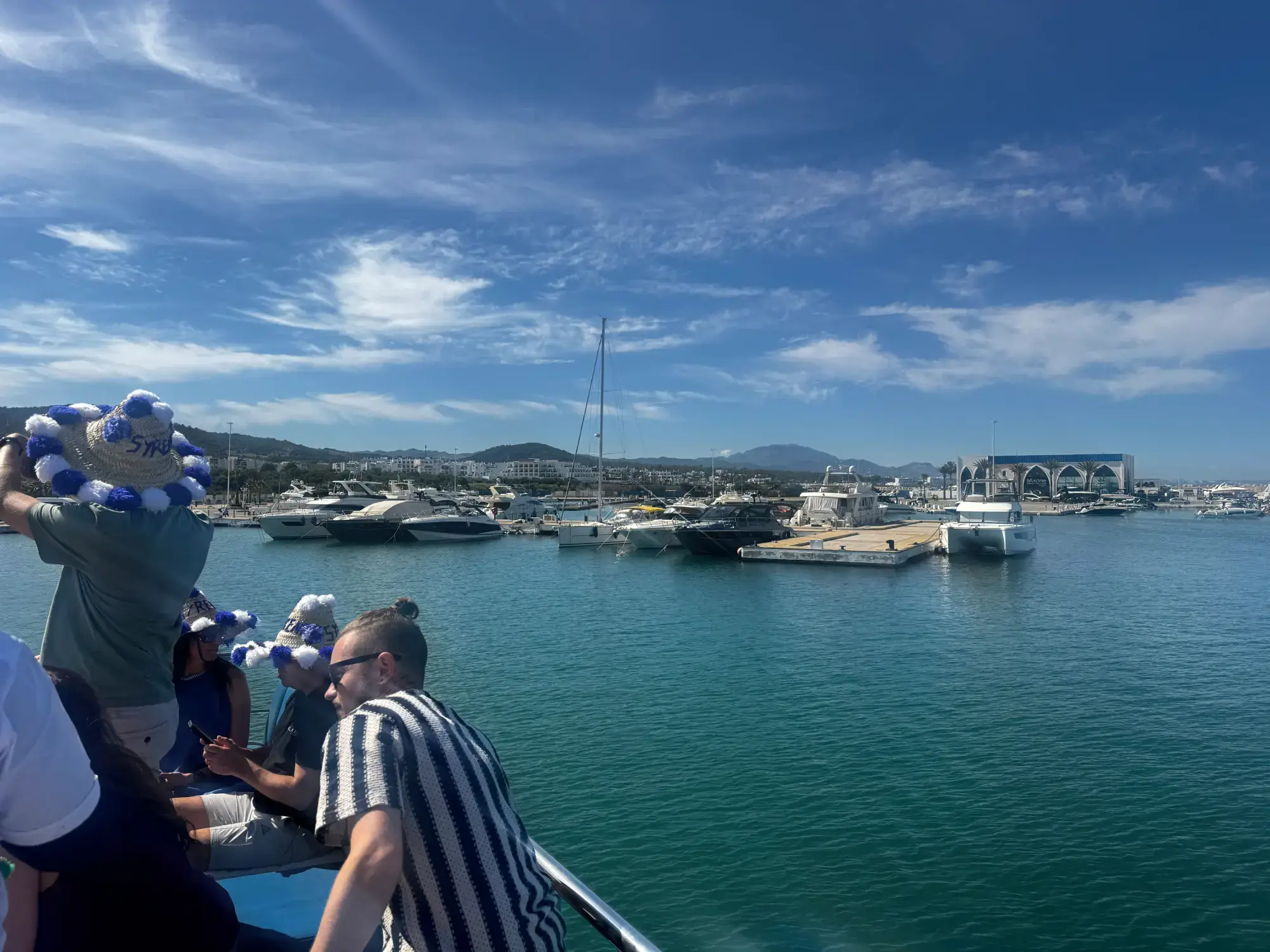
We also went out on a boat from Marina Smir, which ended in a few of us jumping into the sea.
It felt like such a refreshing change from days on our feet in the old towns.
The sun was glittering on the water, and we had traditional Moroccan snacks and more mint tea, of course.
Where I stayed
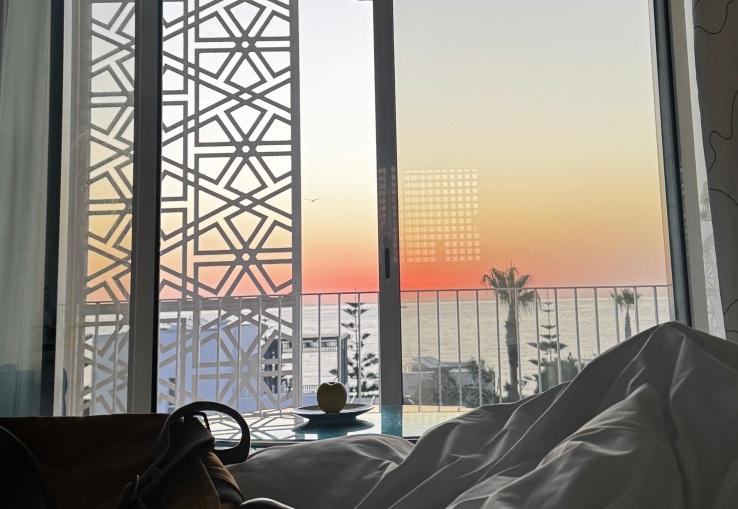
I stayed at Sofitel Tamuda Bay Beach & Spa, which is right on the beach.
I could see the sea straight from my balcony. Actually, I could watch the sun rise and set over the water without even getting out of bed.
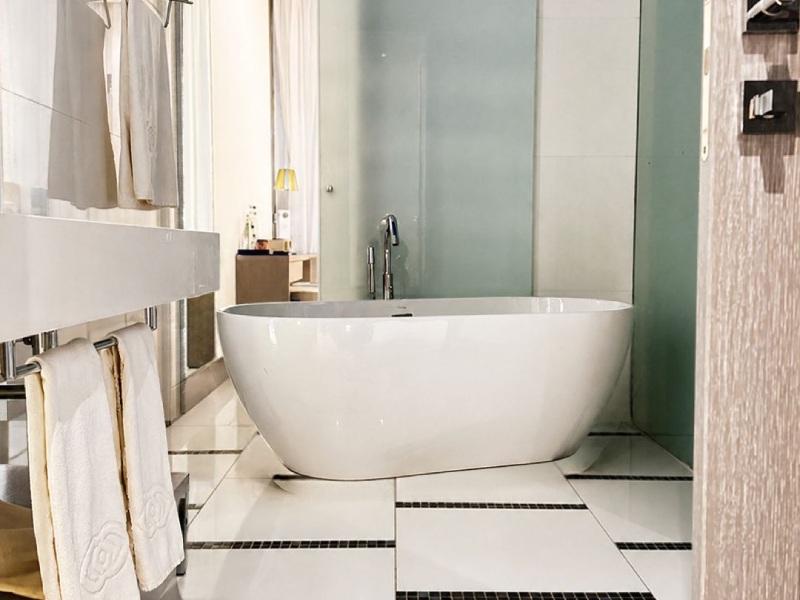
I loved the clean decor and all the different lighting options - amazing if you're not a fan of the "big light".
But my favourite part was the bath. Getting into that at the end of a long day was everything.
Direct flights from Gatwick only started this year, and I have a feeling you’ll be hearing a lot more about Tamuda Bay.
If you book a Moroccan holiday to Temuda Bay, I'd recommend five to seven nights so that you can fit in plenty of down time alongside trips to the old towns.
About the author
A thrill-seeking globetrotter, Lydia is passionate about trying out new experiences. From rushing down the slopes of Savoie to quad biking over the dunes in Cape Verde.