














If you’ve already booked your family summer holiday to Spain, you’ll have the added bonus of being able to witness amazing spectacle while you’re there.
What happens during a total eclipse?
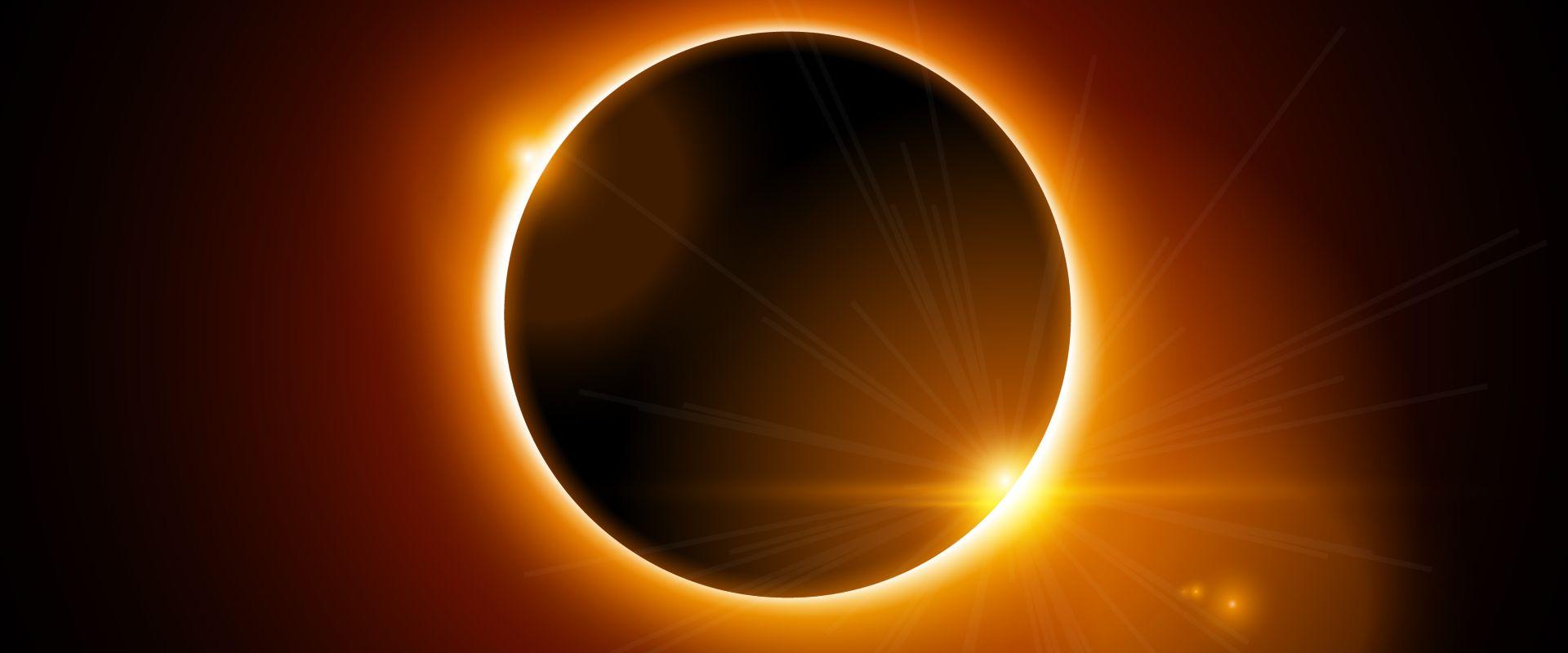
A total eclipse occurs when the moon fully covers the sun for a brief period, turning day into something much more beautiful. When that happens, the sky darkens and the sun’s corona becomes visible. It’s one of the few astronomical events that feels just as dramatic as it sounds.
Why watch a total eclipse instead of a 90% partial eclipse?
A 90% eclipse might sound close enough, but it’s not the same experience. In a partial eclipse, the sun is still visible, so you only get a dimming of daylight. During totality, the sun is fully covered and the sky can suddenly take on an eerie, twilight feel. That short total phase is when you can see the corona, which makes the whole thing extra special.
Where is the best place in Spain to view the 2026 total eclipse?
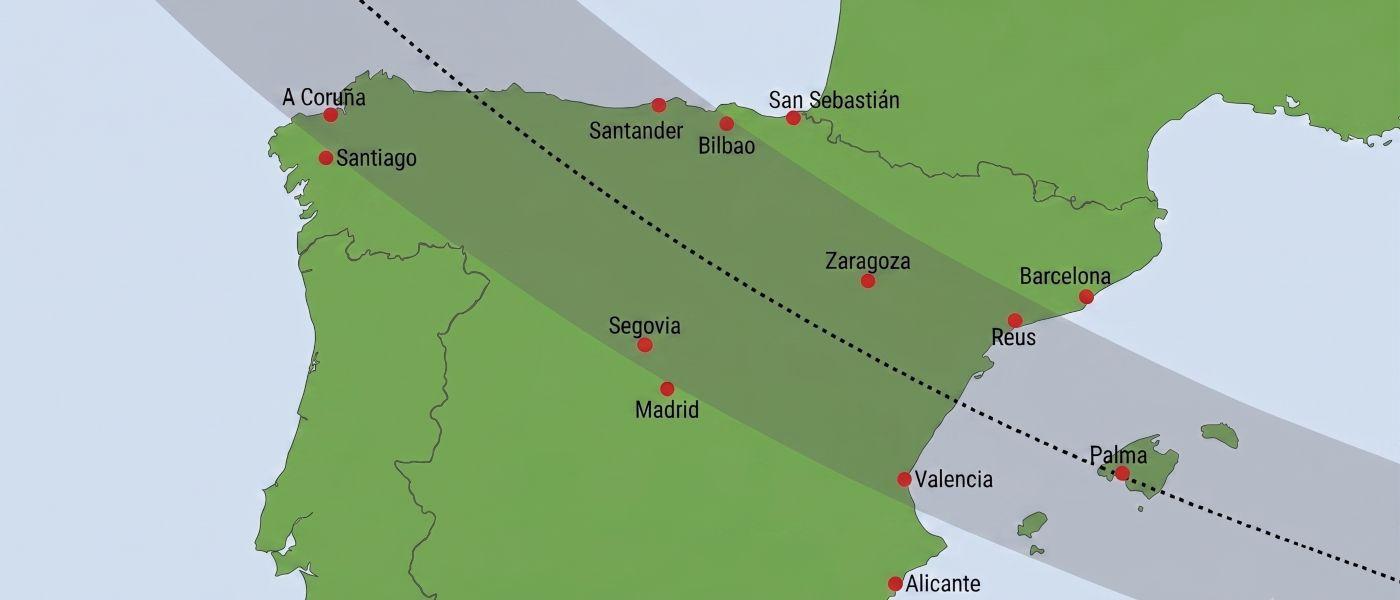
The path of totality includes Bilbao, Coruna, Reus, Santander, Segovia, Valencia, Zaragoza and the entire Balearic Islands, as well as the Costa Dorada.
The eclipse will be at around 8.30pm (local time), so the sun will be setting by then. The further east you are, the higher the chance your view may be obscured by hills, mountains and tall buildings. This means that Bilbao, Coruna and Santander could be the best places to view the eclipse, with them being on or near Spain’s northern coast.
Even in Spain, clear skies aren’t guaranteed. If you’ve got a hire car, keep an eye on the local forecast and be prepared to adapt your plan if conditions change on the day.
Barcelona, Madrid, Santiago de Compostela and San Sebastian all sit outside the path of totality, but are just a short journey from it if you’re staying there and don’t want to miss out.
Where is the best place to view the eclipse on the Balearic Islands?
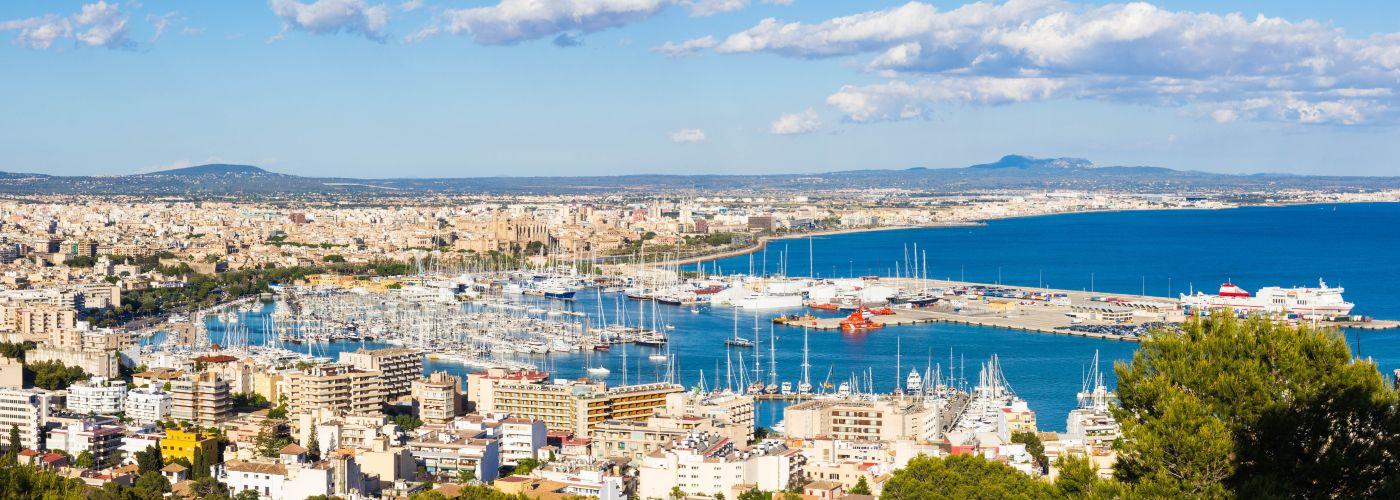
While they are under the path of totality, it’s not necessarily the best place to view the eclipse as the sun will be setting, meaning places further west promise the best viewing conditions. The total eclipse will last slightly longer in Majorca, than Ibiza or Menorca.
If you’re keen to view the eclipse from the Balearics, head high up, preferably close to the coast. For those staying around the Palma area, the roads and trails leading up to Castillo de Bellver are an excellent vantage point. The castle itself will close at 6pm, so you’ll need to pick a point outside the grounds.
Is the total eclipse visible from anywhere else?

Yes, it’ll also be visible from the area between Keflavík and Reykjavík in Iceland. However, summer is considered low-season for Iceland holidays due to the Northern Lights not being visible. This means fewer flights operate in August, and the few that do may already be full.
If you happen to be heading to France, you won’t see a total eclipse, but you’ll witness a higher proportion of the sun being blocked out than back home in the UK. A partial eclipse will also be visible from part of Canada, much of central and northern Europe, as well as Morocco.
You won’t be able to view the eclipse from Cyprus, Egypt, Greece or Turkey, as the sun will have set before the moon blocks it out.
How do I view the eclipse?
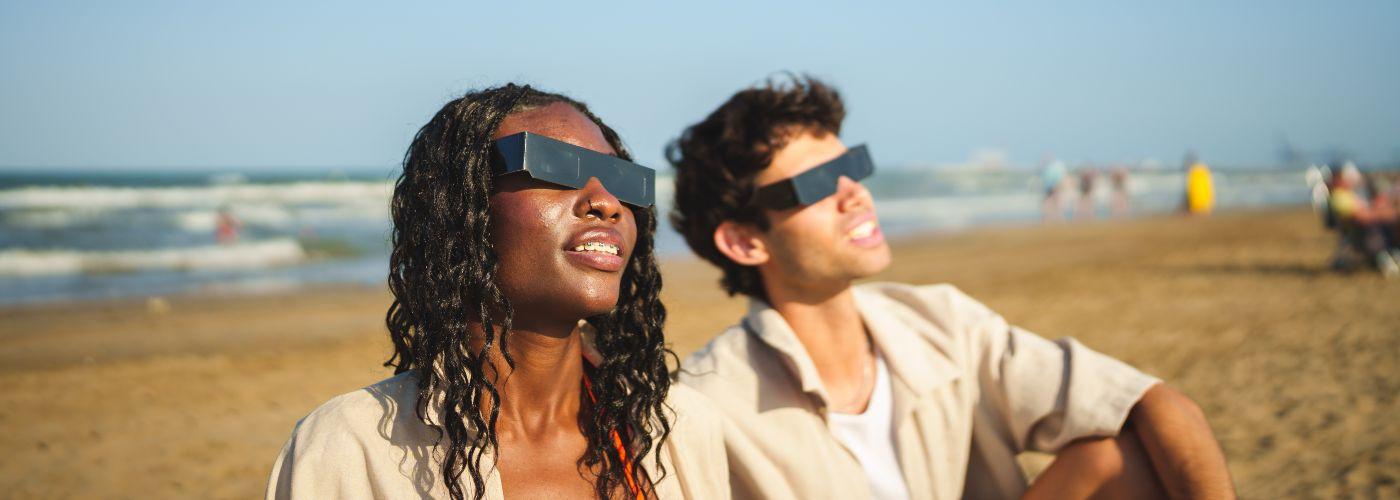
Never look directly at the sun without special solar viewing glasses, except during the (roughly) 90 seconds that it’s completely behind the moon. If you’re buying a pair online, make sure they meet the EN ISO 12312-2:2015 certification. Sky at Night Magazine’s recommendations include Baader Solar Eclipse Observing Glasses, which are currently available online for £3 (plus P&P). If you’re planning more eclipse hunting trips, you may want to invest in a sturdier pair for around £18.
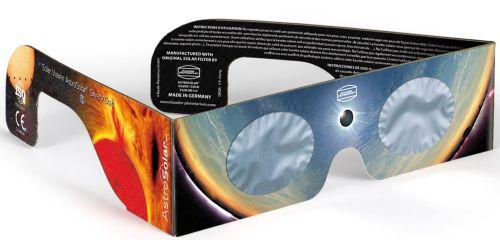 Baader Solar Eclipse Observing Glasses
If I miss the 2026 total eclipse, when will the next one be?
You’ll only have to wait until 2 August 2027. Next year’s will be further south, clipping the very south of Spain, Gibraltar, as well as northern Morocco, Tunisia and Egypt.
Despite Europe getting two total solar eclipses in two years, they are actually really rare. The previous one was 1999, and after 2027, the next one won’t be until 2053.
But if you need your eclipse fix before that, there will be an annular one on 26 January 2028. This is different to a total eclipse because the moon is too far from the earth to completely block out the sun when the two paths cross to create a ‘ring of fire’ effect. It will be possible to view this from a large part of Spain, Portugal and Gibraltar.
So not only does Spain get more than its fair share of sunshine, it hogs all the solar eclipses too.
Not booked Spain this summer but don't want to miss this amazing spectacle? Start planning your solar eclipse escape now.
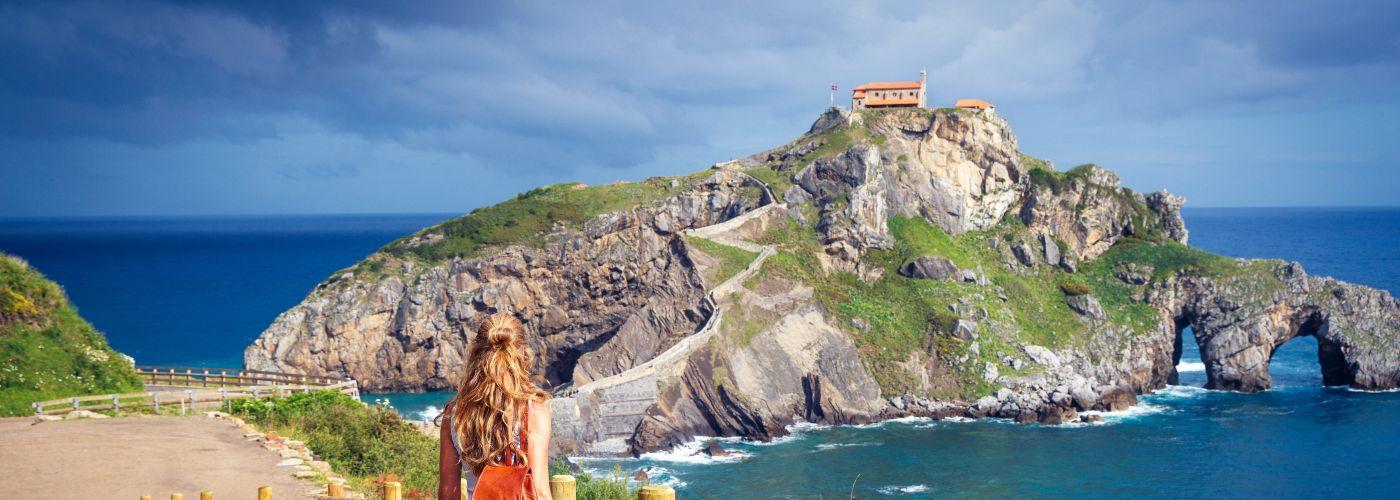 The Basque Coast near Bilbao

About the author
Edd Myerscough has explored more than 15 destinations solo, from discovering top European cities to hiking in the Carpathian Mountains, and admiring the stunning beauty of the Canadian Rockies. If you're after top tips on planning a seamless city break or an adventurous escape, Edd's got you covered with stories and practical advice to inspire your next journey.