





Thomas Cook History
Thomas Cook is the world’s best-known name in travel, thanks to the inspiration and
dedication of a single man. Thomas Cook began his international travel company in 1841, with a
successful one-day rail excursion at a shilling a head from Leicester to Loughborough on 5
July. From these humble beginnings Thomas Cook launched a whole new kind of company – devoted
to helping Britons see the world.
View key dates of Thomas Cook history
A Brief History
On 9 June 1841 a 32-year old cabinet-maker named Thomas Cook walked from his home in Market Harborough to the nearby town of Leicester to attend a temperance meeting. A former Baptist preacher, Thomas Cook was a religious man who believed that most Victorian social problems were related to alcohol and that the lives of working people would be greatly improved if they drank less and became better educated. As he walked along the road to Leicester, he later recalled, 'the thought suddenly flashed across my mind as to the practicability of employing the great powers of railways and locomotion for the furtherance of this social reform'.
At the meeting, Thomas suggested that a special train be engaged to carry the temperance supporters of Leicester to a meeting in Loughborough about four weeks later. The proposal was received with such enthusiasm that, on the following day, Thomas submitted his idea to the secretary of the Midland Railway Company. A train was subsequently arranged, and on 5 July 1841 about 500 passengers were conveyed in open carriages the enormous distance of 12 miles and back for a shilling. The day was a great success and, as Thomas later recorded, 'thus was struck the keynote of my excursions, and the social idea grew upon me'.
Early Tours
During the next three summers Thomas arranged a succession of trips between Leicester, Nottingham, Derby and Birmingham on behalf of local temperance societies and Sunday schools. Within these limits many thousands of people experienced rail travel for the first time, and Thomas was able to lay the foundations of his future business. He later described this period as one of 'enthusiastic philanthropy' since, beyond the printing of posters and handbills, he had no financial interest in any of these early excursions.
Thomas Cook's first commercial venture took place in the summer of 1845, when he organised a trip to Liverpool. This was a far more ambitious project than anything he had previously attempted, and he made his preparations with great thoroughness. Not content with simply providing tickets at low prices - 15 shillings for first-class passengers and 10 shillings for second. Thomas also investigated the route and published a handbook of the journey. This 60-page booklet was a forerunner of the modern holiday brochure.
The Great Exhibition
By the end of 1850, having already visited Wales, Scotland and Ireland, Thomas Cook began to contemplate foreign trips to Europe, the United States and the Holy Land. Such thoughts had to be postponed, however, when Sir Joseph Paxton, architect of the Crystal Palace, persuaded Thomas to devote himself to bringing workers from Yorkshire and the Midlands to London for the Great Exhibition of 1851. This he did with great enthusiasm, rarely spending a night at home between June and October, and he even produced a newspaper, Cook's Exhibition Herald and Excursion Advertiser, in order to promote his tours. By the end of the season Thomas had taken 150,000 people to London, his final trains to the Exhibition carrying 3,000 children from Leicester, Nottingham and Derby.
Across the Channel
Thomas continued to expand his business in Britain, but he was determined to develop it in Europe too. In 1855 an International Exhibition was held in Paris for the first time and Thomas seized this opportunity by trying to persuade the companies commanding the Channel traffic to allow him concessions. They refused to work with him, however, and the only route he was able to use was the one between Harwich and Antwerp. This opened up the way for a grand circular tour to include Brussels, Cologne, the Rhine, Heidelberg, Baden-Baden, Strasbourg and Paris, returning to London via Le Havre or Dieppe. By this route, during the summer of 1855, Thomas escorted his first tourists to Europe.
Switzerland and Italy
Thomas visited Switzerland for the first time in June 1863. Although this initial tour was little more than an information-gathering trip, a party of more than 60 ladies and gentlemen accompanied Thomas as far as Geneva. Among these pioneering tourists was a young woman called Jemima Morrell, who maintained a written account of each day's events. Her original diaries may be studied today in the Thomas Cook Archives. Thomas organised further trips to the Continent in 1863, and by the end of the season he had taken nearly 2000 tourists to Paris, some 500 of whom had continued to Switzerland. With the co-operation of the Paris, Lyons and Mediterranean Railway, Thomas began to issue circular tickets (in both English and French) between Paris and the Alps. He then established the first circular tours of Switzerland, which were such an immediate success that he decided to extend his arrangements across the Alps. The first Italian tours took place in the summer of 1864, when Thomas escorted two large groups, one to Florence and parts of central Italy, the other to Rome and Naples.
Hotel Coupons and Circular Notes
Thomas's travellers to Switzerland and Italy were from the growing middle classes and they expected better accommodation than his earlier working-class customers had. He therefore set out to negotiate with innkeepers and hotel proprietors to provide rooms and meals at good prices. His friendship with hoteliers, who were pleased to get his business, enabled Thomas to develop two important travel systems: one was the hotel coupon, launched in 1868, which travellers could use to pay for hotel accommodation and meals instead of using money; the other was his circular note, first issued in 1874 and a forerunner of the travellers cheque, which enabled tourists to obtain local currency in exchange for a paper note issued by Thomas Cook.
Beyond Europe
Building on his successes in Europe, Thomas made an exploratory trip to North America in 1865 and set up a system of tours covering 4,000 miles of railways. Four years later, in 1869, he hired two steamers and conducted his first party up the Nile. The climax of his career, however, came in September 1872 when, at the age of 63, he departed from Leicester on a tour of the world that would keep him away from home for almost eight months. It had long been his ambition to travel 'to Egypt via China', but such a trip only became practicable at the end of 1869 following the opening of the Suez Canal and the completion of a rail network linking the east and west coasts of America.
Thomas and his small party crossed the Atlantic by steamship and made their way through the United States from New York to San Francisco by rail. They travelled by Pacific steamer to Japan, then across the Inland Sea to China, and afterwards visited Singapore, Ceylon and India. Leaving Bombay, they crossed the Indian Ocean and the Red Sea to Cairo, from where most of the party travelled back to London. Thomas himself, however, set off on an extended tour of Egypt and Palestine, finally returning home via Turkey, Greece, Italy and France after an absence of 222 days. The conducted world tour quickly became an annual event, but many additional tickets were issued to independent travellers, some of whom went via Australia and New Zealand rather than China and Japan.
John Mason Cook
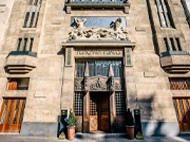
While Thomas was travelling round the world, his son, John Mason Cook, successfully completed the firm's move to a new head office at Ludgate Circus. However, father and son argued over certain aspects of the project and in 1878 their partnership ended. John was a better businessman than Thomas, and he set about expanding the company internationally. In an age when telegraphy was in its infancy and there were no telephones or fax machines, this was far from easy.
John created overseas editions of The Excursionist, the newspaper started by his father in 1851, to inform customers in places such as France, Germany, India, Australasia, America and the Far East about the services he offered. (This newspaper, which became known as The Traveller's Gazette in May 1902, continued to be published until 1939.) He also kept up a continuous stream of correspondence with his offices abroad, checking on their work and complaining if anything went wrong. Like many successful businessmen, John Mason Cook combined a flair for grasping business opportunities with a remarkable memory for small details.
The Gordon Relief Expedition
In 1884 John Mason Cook was asked by the British Government to organise a relief expedition up the Nile to rescue General Gordon from Khartoum. Arrangements were made for the movement of 18,000 troops, nearly 40,000 tons of supplies, 40,000 tons of coal and 800 whaleboats. To transport the coal from Tyneside to Boulac and Assiout via Alexandria, 28 large steamers and 6000 railway trucks were required. An additional 7000 railway trucks were needed for the military stores, while on the Nile 27 steamers and 650 sailing boats were used to carry the troops and supplies. John and his Egyptian managers acted as overseers of the entire operation, which relied on the labour of 5000 local men and boys, and completed their side of the contract in November 1884. Despite all the efforts, however, Khartoum fell in January 1885 and Gordon was killed.
Frank, Ernest and Bert
Thomas and John Mason Cook both died during the 1890s and the business was inherited by John's three sons: Frank Henry, Ernest Edward and Thomas Albert ('Bert'). During the first quarter of the twentieth century - a period which saw the introduction of winter sports holidays, tours by motor car and commercial air travel - the firm of Thos Cook and Son dominated the world travel scene.
The company was incorporated as Thos Cook & Son Ltd in 1924, and in 1926 the headquarters moved from Ludgate Circus to Berkeley Street, Mayfair, a once aristocratic area which was now the centre of London society. Then, in 1928, the surviving grandsons, Frank and Ernest (Bert having died in 1914), unexpectedly sold the business to the Belgian Compagnie Internationale des Wagons-Lits et des Grands Express Européens, operators of most of Europe's luxury sleeping cars, including the Orient Express.
From Wagons-Lits to British Railways
Shortly after the outbreak of World War II, the Wagons-Lits headquarters in Paris was seized by occupying forces, and Cook's British assets were requisitioned by the British Government. To save the company from complete financial collapse in its centenary year, a deal was brokered and, fittingly, the organisation was sold to Britain's four mainline railway companies. Thos Cook & Son Ltd settled its affairs with Wagons-Lits (which retained a 25% share in Cook's overseas) immediately after the war, and in 1948 the firm became state-owned as part of the nationalised British Railways.
The Fifties and Sixties
Thomas Cook & Son Ltd benefited from the post-war holiday boom, which saw one million Britons travelling abroad by 1950. The company set up a Business Travel Service and refurbished its holiday camp at Prestatyn (which had opened shortly before the outbreak of war). Although Cook's remained the largest and most successful company in the industry, its pre-eminence was now being challenged by new travel firms that were able to undercut Cook's prices and offer cheap package deals. In 1965 the company's net profits exceeded £1 million for the first time, but in an increasingly cut-throat marketplace Thomas Cook began to fall behind its younger rivals.
Beyond Europe
Building on his successes in Europe, Thomas made an exploratory trip to North America in 1865 and set up a system of tours covering 4,000 miles of railways. Four years later, in 1869, he hired two steamers and conducted his first party up the Nile. The climax of his career, however, came in September 1872 when, at the age of 63, he departed from Leicester on a tour of the world that would keep him away from home for almost eight months. It had long been his ambition to travel 'to Egypt via China', but such a trip only became practicable at the end of 1869 following the opening of the Suez Canal and the completion of a rail network linking the east and west coasts of America.
Thomas and his small party crossed the Atlantic by steamship and made their way through the United States from New York to San Francisco by rail. They travelled by Pacific steamer to Japan, then across the Inland Sea to China, and afterwards visited Singapore, Ceylon and India. Leaving Bombay, they crossed the Indian Ocean and the Red Sea to Cairo, from where most of the party travelled back to London. Thomas himself, however, set off on an extended tour of Egypt and Palestine, finally returning home via Turkey, Greece, Italy and France after an absence of 222 days. The conducted world tour quickly became an annual event, but many additional tickets were issued to independent travellers, some of whom went via Australia and New Zealand rather than China and Japan.
Thomas Cook Today
About Thomas Cook Group, The Co-operative Travel and Midlands Co-operative:
The three partners established a joint venture on 4 October 2011 to combine their UK high street travel and foreign exchange businesses, creating the UK's largest multi-channel travel retailer. The joint venture has around 1,100 branches across England, Scotland, Wales and Northern Ireland trading under the Thomas Cook, The Co-operative Travel, Co-op Travel, Ilkeston Co-op and Going Places brands. The Co-operative Travel’s cruise businesses, call centres, independent consortia - which has around 150 members - business travel, website and home worker networks are all part of the joint venture.
About Thomas Cook UK & Ireland:
Thomas Cook UK & Ireland is the second largest leisure travel group in the UK with around 15,500 employees. The company has a number of leading websites (www.thomascook.com, www.directholidays.com and www.airtours.uk), and some of the world's favourite travel brands. These brands include Airtours, Club 18-30, Cresta, Cruise Thomas Cook, Direct Holidays, Elegant Resorts, essentialtravel.co.uk, Flexibletrips, flythomascook.com, Gold Medal, www.hotels4u.com, Manos, www.medhotels.com, Neilson, netflights.com, Panorama, Pure Luxury, Sunset, Swiss Travel Service, Thomas Cook, Thomas Cook Signature, Thomas Cook Sport and Thomas Cook Style.
Thomas Cook Airlines operates a fleet of 35 aircraft from 21 regional airports to destinations worldwide.
Thomas Cook offers a range of financial services including foreign exchange, the Thomas Cook Credit Card, the Thomas Cook Cash Passport (the new generation of travellers' cheques), and a wide range of travel insurance policies. The company owns White Horse Insurance Ireland Limited, who underwrite Thomas Cook's travel insurance and are authorised and regulated by the Central Bank of Ireland.
Thomas Cook also has a leading publishing division offering a comprehensive portfolio of over 300 independently authored travel guidebooks to more than 150 destinations across the world.
Thomas Cook UK & Ireland is part of Thomas Cook Group plc (www.thomascookgroup.com).
Further Reading
W. Fraser Rae, The Business of Travel - A Fifty Years' Record of Progress (Thos Cook
& Son, 1891)
John Pudney, The Thomas Cook Story (Michael Joseph, 1953)
Edmund Swinglehurst, The Romantic Journey - The story of Thomas Cook and Victorian
Travel (Pica Editions, 1974)
Edmund Swinglehurst, Cook's Tours - The Story of Popular Travel (Blandford Press,
1982)
Piers Brendon, Thomas Cook - 150 Years of Popular Tourism (Secker & Warburg,
1991)
Robert Ingle, Thomas Cook of Leicester (Headstart History, 1991)
Derek Seaton, The Local Legacy of Thomas Cook (self-published, 1996)
Lynne Withey, Grand Tours and Cook's Tours - A History of Leisure Travel, 1750 to 1915
(Aurum Press, 1998)
Andrew Williamson, The Golden Age of Travel - The Romantic Years of Tourism in Images from
the Thomas Cook Archives (Thomas Cook Publishing, 1998)
Paul Smith, The History of Tourism - Thomas Cook and the Origins of Leisure Travel
[boxed set of four volumes] (Routledge/ Thoemmes Press, 1998)
Jill Hamilton, Thomas Cook - The Holiday Maker (Sutton, 2005)
Company Archives
Thomas Cook possesses a unique collection of archive material covering all aspects of the company's history from the founder's first excursion on 5 July 1841 to the present. This material is held in the Company Archives, which functions as a corporate 'memory', offering an information service to Thomas Cook's various departments and to interested members of the public, as well as providing research facilities for academics, journalists and picture researchers from all over the world.
Top Destinations
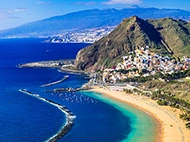
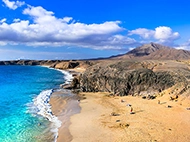
Thomas Cook has many top destinations including Turkey, Crete, Egypt, Tenerife, Gran Canaria & Greece. Other popular holidays include our long haul destinations; Las Vegas, Mexico, Florida & Cuba
Family Holidays
We offer some great package family holidays. Some of our destinations include Florida, Canary Islands, Majorca, Greece, Cyprus & Turkey